Wash day is more than just shampooing your hair — it’s a ritual. And like any good ritual, the preparation matters just as much as the main event. Before you wash, there are a few essential steps that can make or break the health of your hair. Whether you’re a veteran or just starting to build your routine, these essential steps will set you up for a smoother, more effective cleanse every single time.
1. Detangling Your Hair Before Washing
One of the biggest mistakes people make on wash day is skipping detangling before the rinse. Wet hair is more elastic and fragile, which means trying to detangle after washing can lead to unnecessary breakage and frustration. Detangling before you wash gives you more control and significantly reduces damage.
Why You Should Detangle Before Washing:
- Reduces breakage from manipulating fragile wet strands
- Makes shampooing easier and more thorough
- Prevents matting and excessive knots forming during the wash
Tools to Use:
- Wide-tooth comb — great for all hair types, especially thick or curly hair
- Detangling brush — ideal for minimizing pain on textured or coily hair
- Your fingers — the gentlest option for loosening large knots first
Pro tip: Always start detangling from the ends of your hair and work your way up to the roots. This prevents you from dragging knots down the length of your hair and causing unnecessary breakage. Work in small sections, rushing this step is where most damage happens.
2. Why You Should Section Your Hair Before Wash Day
If you’ve ever felt overwhelmed trying to manage your hair during wash day, sectioning might be the game-changer you’ve been missing. Dividing your hair into manageable sections before you begin ensures that every part of your hair receives equal attention — and it keeps things organized so you’re not re-doing work.
How Many Sections Do You Need?
- Fine or straight hair: 2–4 sections is usually enough
- Thick, wavy, or curly hair: 4–6 sections recommended
- Very thick, coily, or locs: 6–8+ sections for maximum control
Tools to Have on Hand:
- Butterfly or jaw clips
- Snag-free hair ties or scrunchies
- Duck bill clips
Pro tip: Sectioning and detangling go hand in hand. Work through one section at a time — detangle it, then secure it before moving on. This way you’ll never lose track of where you’ve been, and each section gets the focused care it deserves.
3. Check for Product Buildup Before Cleansing
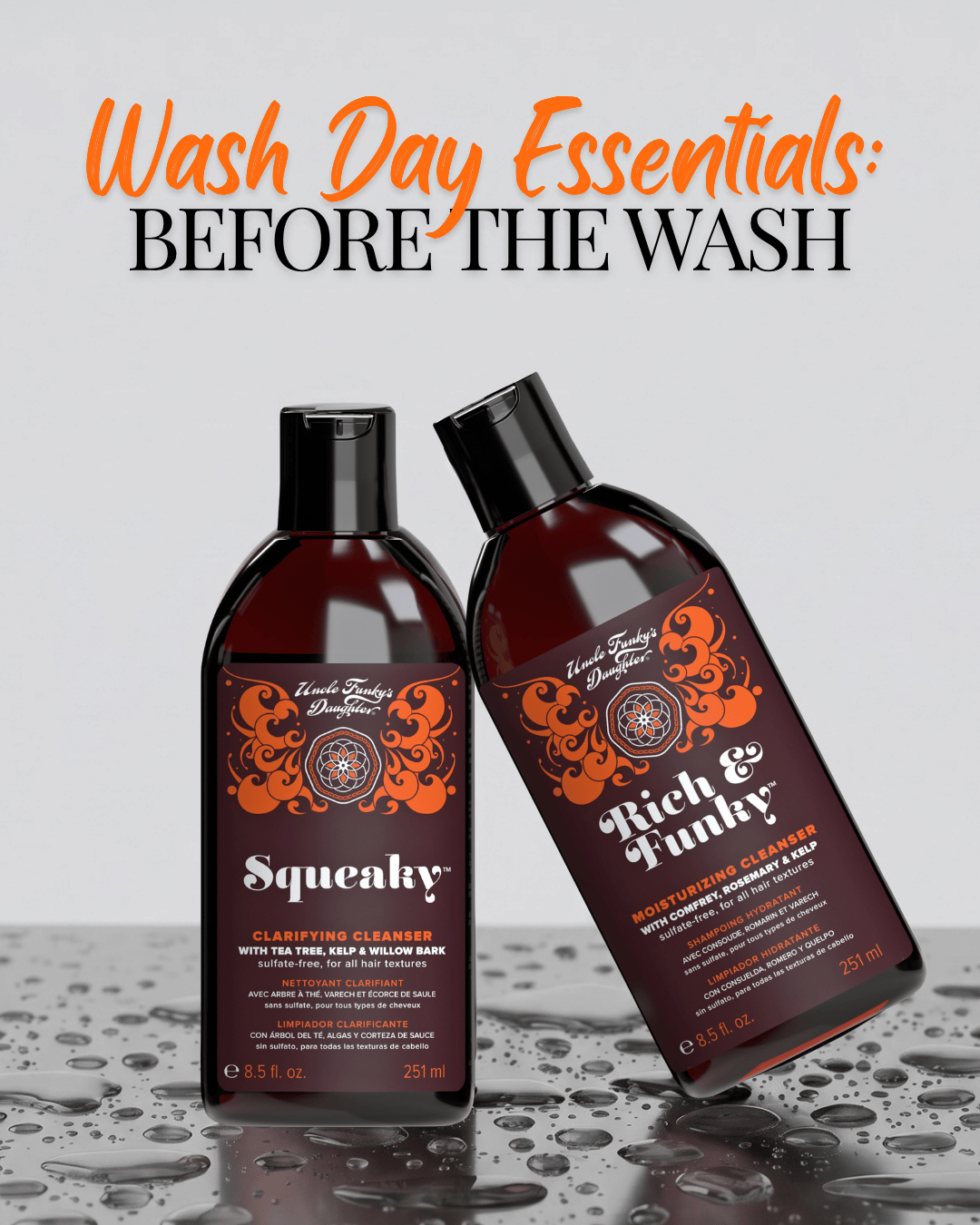
Before you choose which shampoo to reach for, it’s worth taking a moment to assess whether your hair and scalp have product buildup. Buildup happens when layers of styling products, oils, and residue accumulate over time — and if left unaddressed, it can lead to dull, weighed-down hair, scalp irritation, and even impaired hair growth.
Signs You Have Product Buildup:
- Your hair feels waxy, sticky, or rough even before washing
- Products don’t seem to absorb or work as well as they used to
- Your scalp itches, feels flaky, or looks dull
- Your hair looks flat, lifeless, or loses its curl definition quickly
Clarifying vs. Regular Shampoo — Which Do You Need?
- Regular shampoo: ideal for weekly washing with minimal product use
- Clarifying shampoo: a deeper cleanse for heavy buildup, used once or twice a month
- Co-wash (conditioner wash): a gentle option for low-manipulation, moisture-focused wash days
Pro tip: Think of a clarifying shampoo like a reset button for your hair. You don’t need it every wash day, but scheduling it into your routine once or twice a month can make a noticeable difference in the health and vibrancy of your hair.
Conclusion
The steps you take before washing your hair are just as important as the wash itself. Detangling prevents damage. Sectioning keeps you organized and ensures nothing gets missed. Assessing for product buildup helps you choose the right cleanser so your hair actually gets clean, not just rinsed.
Think of your pre-wash routine as an act of care and intention. When you slow down and give your hair the attention it deserves before the water even runs. A thoughtful pre-wash routine helps your hair stay healthier, cleaner, and easier to style long after wash day is over.