Your curls stretch everyday.
During detangling. While styling. When you pull them into a puff or a slick back. Even when you gently separate a curl. How your hair responds to that stretch can tell you a lot about what your strands may need.
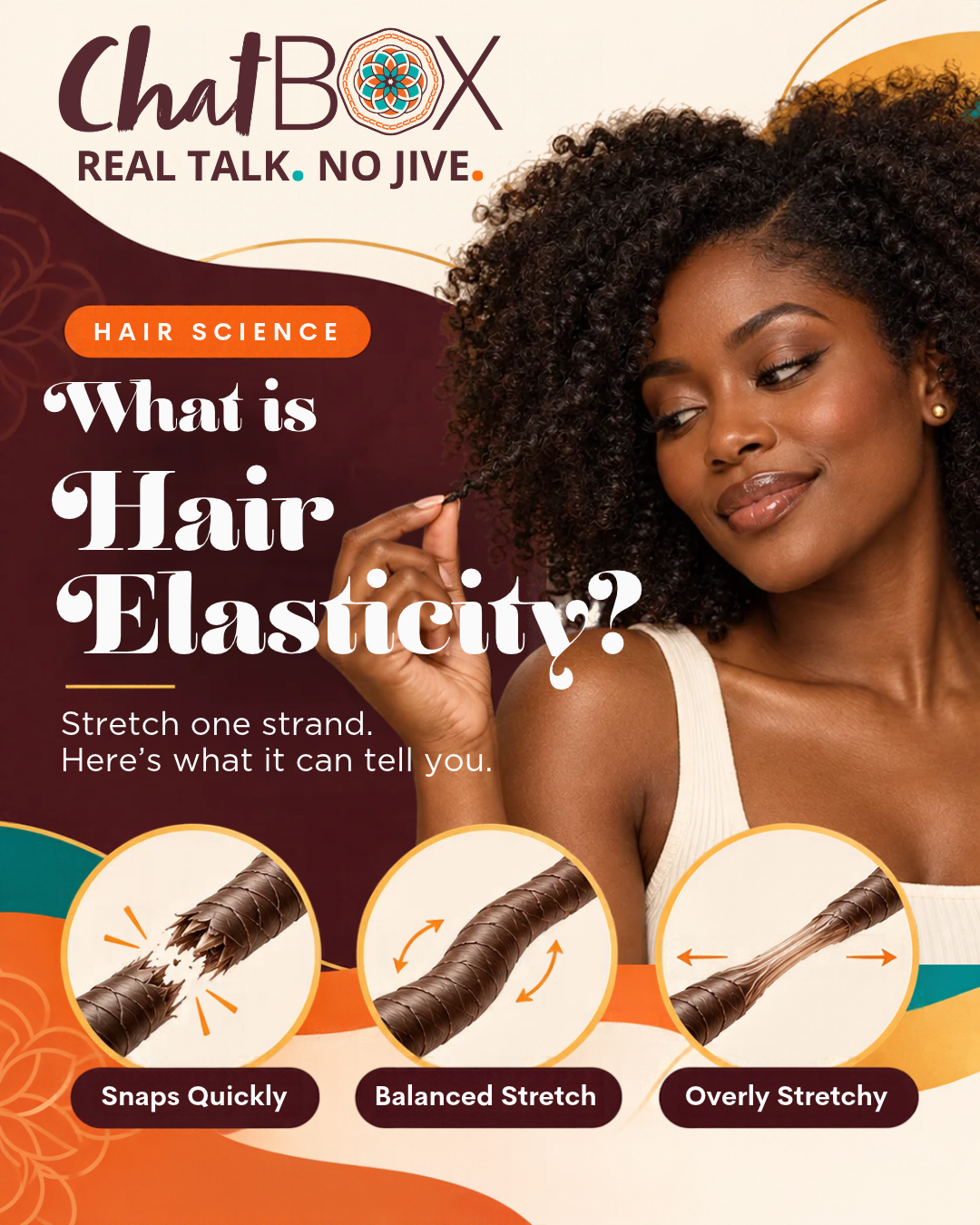
Hair elasticity is your strand’s ability to stretch and return to its original shape without breaking.
That’s Hair Elasticity.
Healthy hair usually has a balance of flexibility and strength. It should have some give, but it should not feel overly stretchy, weak, or brittle.
Think of elasticity as another clue, just like porosity, that can help you understand how your hair behaves.
How Can You Check Your Hair?
You do not need an elaborate test.
Take one shed strand of clean hair and gently stretch it between your fingers.
Pay attention to what happens:
Does it snap immediately?
Your hair may be lacking flexibility.
Does it stretch a lot but struggle to return?
Your strands may need more balance.
Does it stretch slightly and bounce back?
That is generally what you want to see.
One strand will not tell you everything, so look for patterns in how your hair behaves over time.
Why Elasticity Can Change
Your hair’s elasticity is not fixed forever.
Heat styling, chemical treatments, color, dryness, mechanical stress, and general wear can all affect the structure of the strand over time.
That is why the routine your hair loved six months ago may not always be what it needs today.
If Your Hair Has Low Elasticity
Hair with low elasticity may:
- Feel stiff or brittle
- Snap easily when stretched
- Break during detangling
- Feel especially dry
For hair that barely stretches before snapping and also feels dry or stiff, I’d prioritize softness and lubrication.
Low elasticity: Supercurl + Extra Butter
- Supercurl Miracle Moisture Creme helps moisturize, soften, and detangle dry, brittle hair. Its coconut oil, shea butter, and glycerin make it a practical option when strands need more conditioning during styling.
- Extra Butter Curl Forming Creme offers a richer blend of coconut oil, palm kernel oil, and shea butter to soften dry hair while providing definition and slight hold. I’d choose it when hair responds well to a heavier cream.
These are two styling options to choose between, depending on the richness the hair needs. You don’t have to layer both.
If Your Hair Feels Overly Stretchy
Hair can also stretch too much.
You may notice that it:
- Feels gummy or overly soft when wet
- Stretches without bouncing back
- Loses shape easily
- Breaks after being stretched too far
This can be a sign that your hair needs more balance rather than simply more moisture. Be gentle with manipulation and avoid piling on heavy products just because the hair feels soft.
Excessive stretch with poor recovery: Heal & Renew + Good Hair
- Heal & Renew Intensive Hair Masque provides a rinse-out treatment with silk-derived ingredients, aloe vera, and conditioning oils. I’d make this the main treatment recommendation because it combines moisture replenishment with the brand’s strengthening focus. UFD recommends using it monthly or as needed.
- Good Hair Leave-In Conditioning Styling Creme provides ongoing detangling and conditioning, with hydrolyzed silk and wheat protein for strengthening support. Its role is the leave-in styling step after washing, rather than replacing the masque.
What Balanced Elasticity Looks Like
Hair with balanced elasticity can stretch slightly and then return to its shape without snapping.
That balance can help with:
- Curl definition
- Detangling
- Styling
- Reducing unnecessary breakage
The Bottom Line
Elasticity is less about labeling your hair and more about learning how it responds.
If your strands are snapping, stretching too far, or simply not behaving the way they normally do, pay attention.
Your hair may be telling you it needs a better balance of moisture, strength, and gentler handling.
Curl question: When you gently stretch a strand, does it snap, stretch too far, or bounce back?